Disorganized Attachment Style and Money

Is this Attachment Style holding you back from your next-level success?

Disorganized attachment style typically refers to a pattern of inconsistent or unpredictable behavior in relationships, often stemming from early childhood experiences. While attachment styles are primarily associated with interpersonal relationships, they can influence various aspects of life, including one’s relationship with money.

NEW program ALERT > The Abundance League Mastermind – My new one-of-kind program designed to show you exactly how to scale your business to the high 6 and 7 figures without burning yourself out. {Pre-Launch Sale $3000 OFF}

Here are some signs that may indicate a disorganized attachment style when it comes to money:

  1. Impulsive spending: Individuals with a disorganized attachment style may engage in impulsive and unplanned spending, often driven by emotional needs rather than financial considerations. You might use money as a way to soothe yourself or seek temporary relief from distressing emotions.
  2. Financial self-sabotage: People with a disorganized attachment style may engage in self-sabotaging behaviors that hinder their financial stability and success. This could involve neglecting financial responsibilities, missing bill payments, or making poor financial decisions repeatedly.
  3. Extreme financial dependence or avoidance: Some individuals with a disorganized attachment style may swing between extremes of financial dependence and avoidance. 
  4. Chaotic financial organization: Disorganized attachment can manifest in disorganization and chaos when it comes to financial matters. This may involve misplacing important documents, failing to keep track of expenses, or lacking a clear budget or financial plan.
  5. Money as a source of anxiety or shame: People with a disorganized attachment style may experience heightened anxiety, guilt, or shame surrounding money. They might feel a deep-seated fear of financial instability or unworthiness, which can negatively impact their financial decision-making and overall well-being.
  6. Impaired long-term financial planning: Individuals with a disorganized attachment style may struggle with creating and sticking to long-term financial plans. They might have difficulty envisioning future goals or may be prone to making impulsive decisions that undermine their financial stability over time.

Have you noticed any connections between your attachment style and your financial attitudes? Share your experiences and insights with me >> Message me on Instagram or TikTok.

YOUR Season of Abundance Walk: Guided Meditation Series. Click here to get it for FREE!! projectmewithtiffany.com/seasonofabundance

FINAL SPOTS (Mega Bonus Sale) > ProjectME Posse Business Coaching Membership Join today and get my $300 Content Creation Made Easy course bundle for FREE!

Tiffany on Instagram @projectme_with_tiffany 

Tiffany on TikTok @projectme_with_tiffany

Subscribe to Tiffany’s FREE weekly digest The Secret Posse 

Recent Episodes

Ep 827 The Identity Shift Required Before Your Money Reality Jumps

Making more money as an entrepreneur isn’t always about working harder, creating more content, or finding another business strategy. At a certain point, reaching a new income level requires an identity shift > changing how you make decisions, respond to fear and self-doubt, communicate your expertise, and keep moving when your external business results haven’t caught up yet.

Your financial identity can influence what you’re willing to charge, how visible you’re willing to become, the opportunities you pursue, how confidently you sell, and what you do when something doesn’t work as quickly as expected.

The identity shift that can happen before you make more money isn’t becoming fearless. It’s learning how to experience fear without automatically allowing it to make your business decisions.

LISTEN NOW »

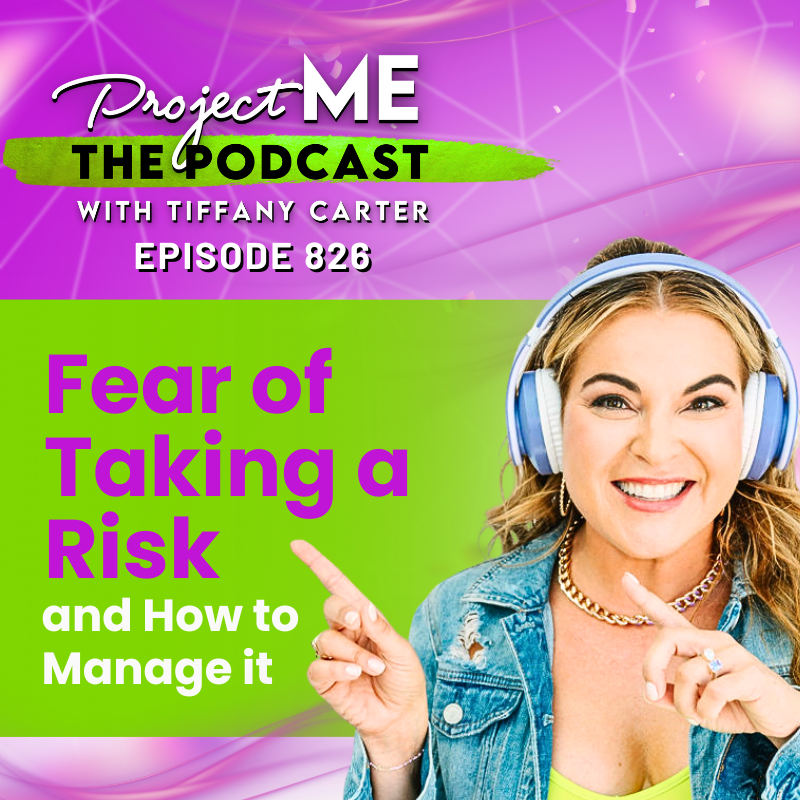
Ep 826 Fear of Taking a Risk and How to Manage it

That uncertainty is where many capable entrepreneurs begin to hesitate.
In this episode of the ProjectME with Tiffany Carter podcast, Tiffany explores the fear of taking risks in business and what is really happening when you find yourself repeatedly asking, “What if it doesn’t work?” Whether you are thinking about starting a business, launching a new offer, investing money, becoming more visible online, changing direction, or making a decision that could significantly increase your income, fear can make staying where you are feel safer than moving toward what you actually want.

Fear of failure can show up as overthinking, perfectionism, procrastination, excessive preparation, and constantly searching for more information before making a decision. You may believe you are being careful or responsible when you are actually trying to create enough certainty to guarantee an outcome before you act.

Building a successful business requires making decisions without knowing exactly how every decision will turn out. The goal is not to eliminate fear before taking action. It is to develop the capacity to move while fear and uncertainty are still present.

LISTEN NOW »

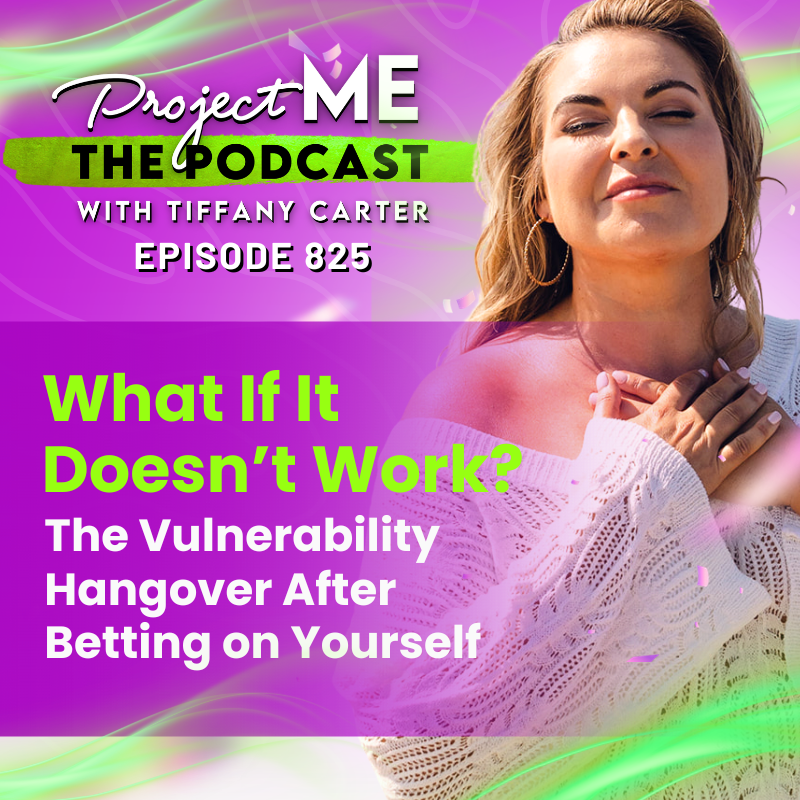
Ep 825 What If It Doesn’t Work? The Vulnerability Hangover After Betting on Yourself

You launched the offer, made the investment, raised the price, announced the goal, started the business, or finally put yourself out there. You expected to feel empowered afterward. Instead, you’re questioning everything you were certain about days ago and wondering whether you completely overestimated yourself.

That’s the vulnerability hangover, and it can hit hard when you’re making a major identity shift. Your brain doesn’t have the outcome yet, so it starts searching for evidence. You check the numbers more frequently. You analyze people’s reactions. You compare your results to someone else’s. Before long, “I don’t know how this is going to turn out yet” becomes “I think I made a mistake.”

This is where fear of failure becomes especially convincing because it can start sounding like logic, intuition, or even good business strategy.

In this episode, I’m breaking down what happens when you’re caught in that uncomfortable space between making the decision and getting the evidence, why being seen trying can feel so vulnerable, and what to do before self-doubt convinces you to abandon something that hasn’t had enough time to work.

LISTEN NOW »